
OAL News

Top 3 trends from iba 2018
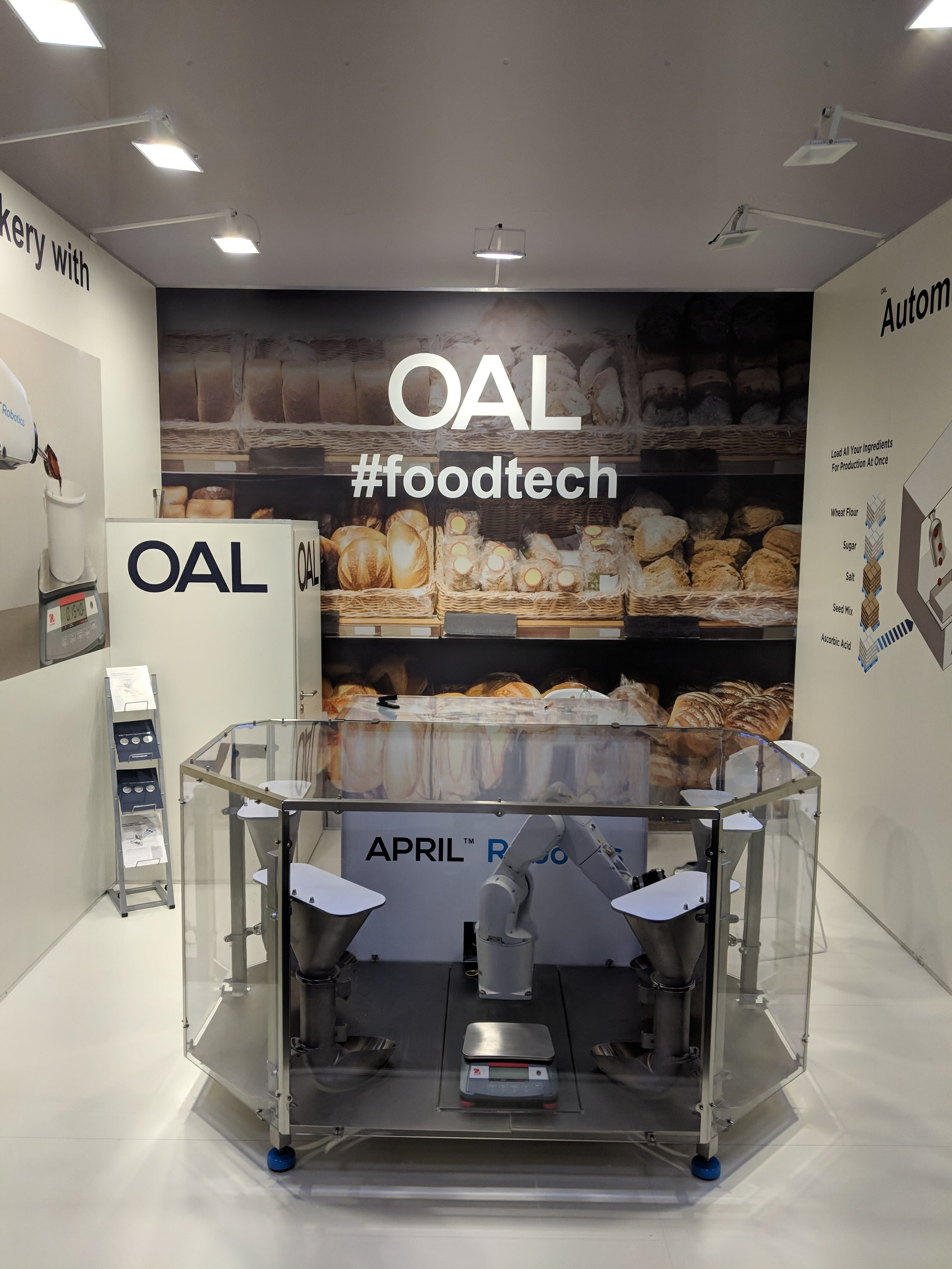
Our team is back from the iba 2018 show, and what a show it was! As you can see, we certainly had a lot of fun meeting with many of our current customers and impressing potential new ones with our APRIL Robotics Ingredient Handling system!
Our team is back from the iba 2018 show, and what a show it was! As you can see, we certainly had a lot of fun meeting with many of our current customers and impressing potential new ones with our APRIL™ Robotics Ingredient Handling system!
The 24th edition of the global bakery show attracted 76,800 visitors from all over the world: we spoke to people from Australia to Argentina, and India to Italy! Overall the mood was buoyant at the show, with many positive about the industry’s economic development, echoing Confectionery Production’s forecast that the bakery product market is set to reach $530 billion by 2023. Our very own Jake Norman, Innovation Manager, was one of the 72 speakers at the new iba Speakers Corner, sharing our insights with visitors eager to stay ahead of the curve and make the most of this industry growth.
If you didn’t get a chance to make it to the show, we thought we’d share with you our top three trends. Read on to find out!
Trend 1: Rising labour costs
The rising cost of labour was on the tip of the tongue of everyone who came to speak with us at the show. In some regions, the hourly rate required to attract staff is becoming unmanageable, while in others, it’s impossible to fill positions as companies are unable to meet wage expectations. Even in areas where labour costs have not traditionally posed an issue, there was a definite shift towards future-proofing bakeries to mitigate any forthcoming wage increases that could affect profits. It’s clear that bakeries must seek out alternative methods of increasing the efficiency of their current processes to mitigate the impact of these rising costs.
Trend 2: Health & safety
Many of our visitors mentioned the evolving health & safety regulation that impacts the bakery industry. Health & safety experts around the world are highly aware of the risks posed to bakery operators who must work with powders, such as flour, enzymes and starch. It was a key topic for the Health & Safety Executive at the Federation of Bakers’ Conference 2018, but the UK is not alone in this concern. With occupational asthma, rhinitis and dermatitis all potential consequences of the weighing and handling process, regulators are cracking down on bakeries and setting lower maximum exposure limits.
Many bakeries are concerned not just with the health of their workforce, but also the potential expense that could be incurred by implementing further safety measures or the impact of the aforementioned higher labour costs if more employees are needed to reduce operator exposure time. There’s no getting away from powders in the bakery industry, so companies require a cost-effective solution to ensure operator safety without impacting the bottom line.
Trend 3: Digitalisation
Wandering around the many halls of the iba, it was clear to see that digitalisation had taken over almost every stand. Digital solutions and processes were unanimously recognised as the key development needed in the bakery sector - and not just at the packaging end. Robots carrying out tasks from pick and place to rolling dough are paving the way as this traditionally conservative industry starts to open up to the possibilities of the digital revolution to maximise profits, improve traceability and increase product and employee safety.
Toast of the trends
Three seemingly disparate trends, but one solution: autonomous ingredient weighing and handling allows bakeries to tackle all three.
The APRIL™ Robotics Ingredient Handling system is the world’s first robotic micro-ingredient weighing solution. Easy to integrate into existing bakeries, it allows you to conduct unmanned operations, helping to reduce your exposure to rising labour costs or freeing up your workforce to complete more value-added tasks. Unmanned weighing also helps to mitigate health & safety risks associated with your operators handling powders as they’re no longer exposed to the dangerous effects of dust. This is great news for your staff but also for the bottom line as you can significantly reduce PPE, ventilation and maintenance expenses.
The APRIL™ Robotics Ingredient Handling system also allows you to improve efficiency and reduce waste, thanks to +/- 1g degree of accuracy, as well as improving traceability and product safety as the system eliminates the risk of cross-contamination.
So if these trends affect your business, we need to talk! Our APRIL™ Robotics experts can help you revolutionise your bakery, cutting labour costs and removing a significant health & safety risk from the factory floor. Download our factsheet or get in touch for more information.

Double win for OAL at PPMA 2018
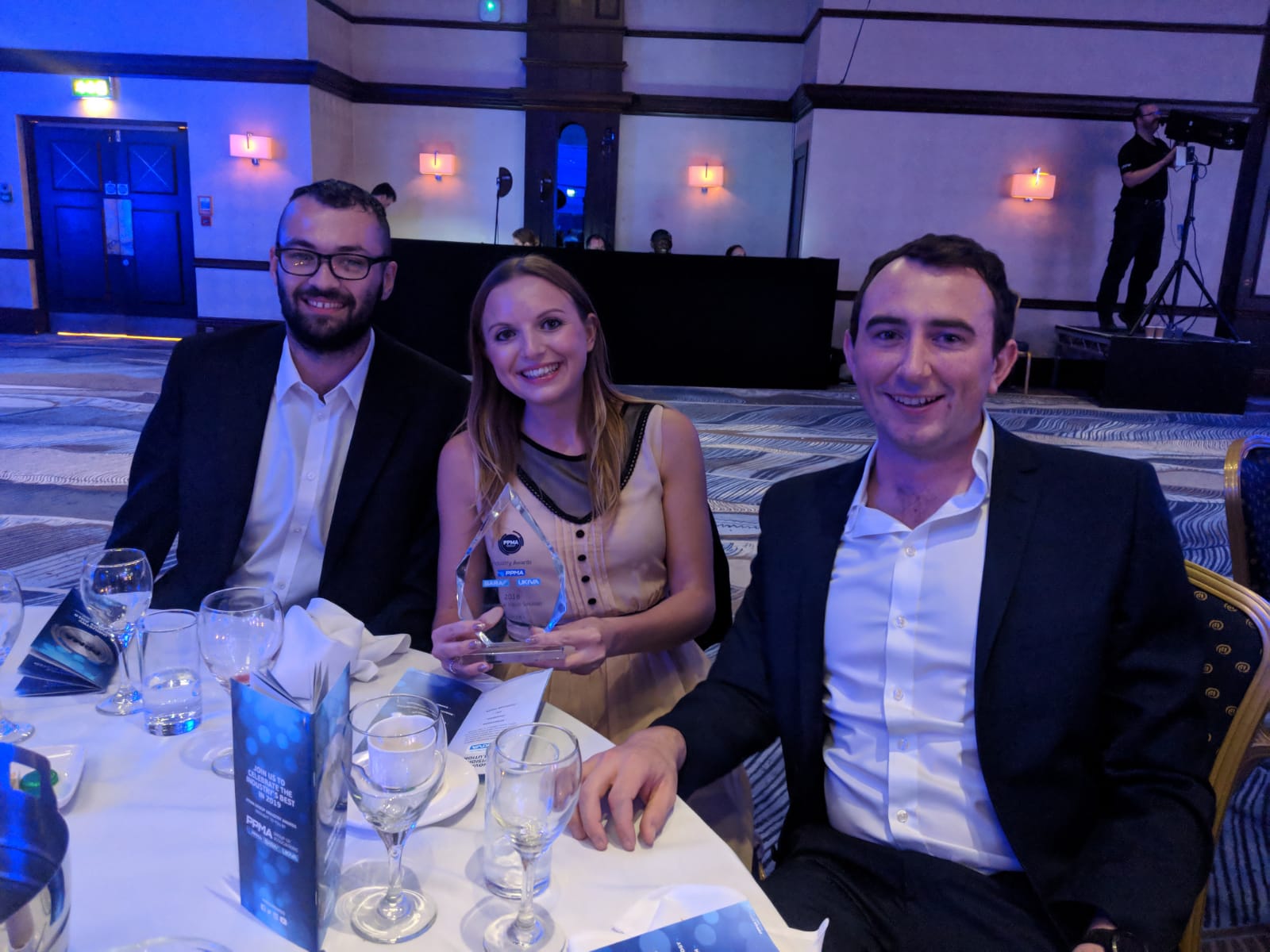
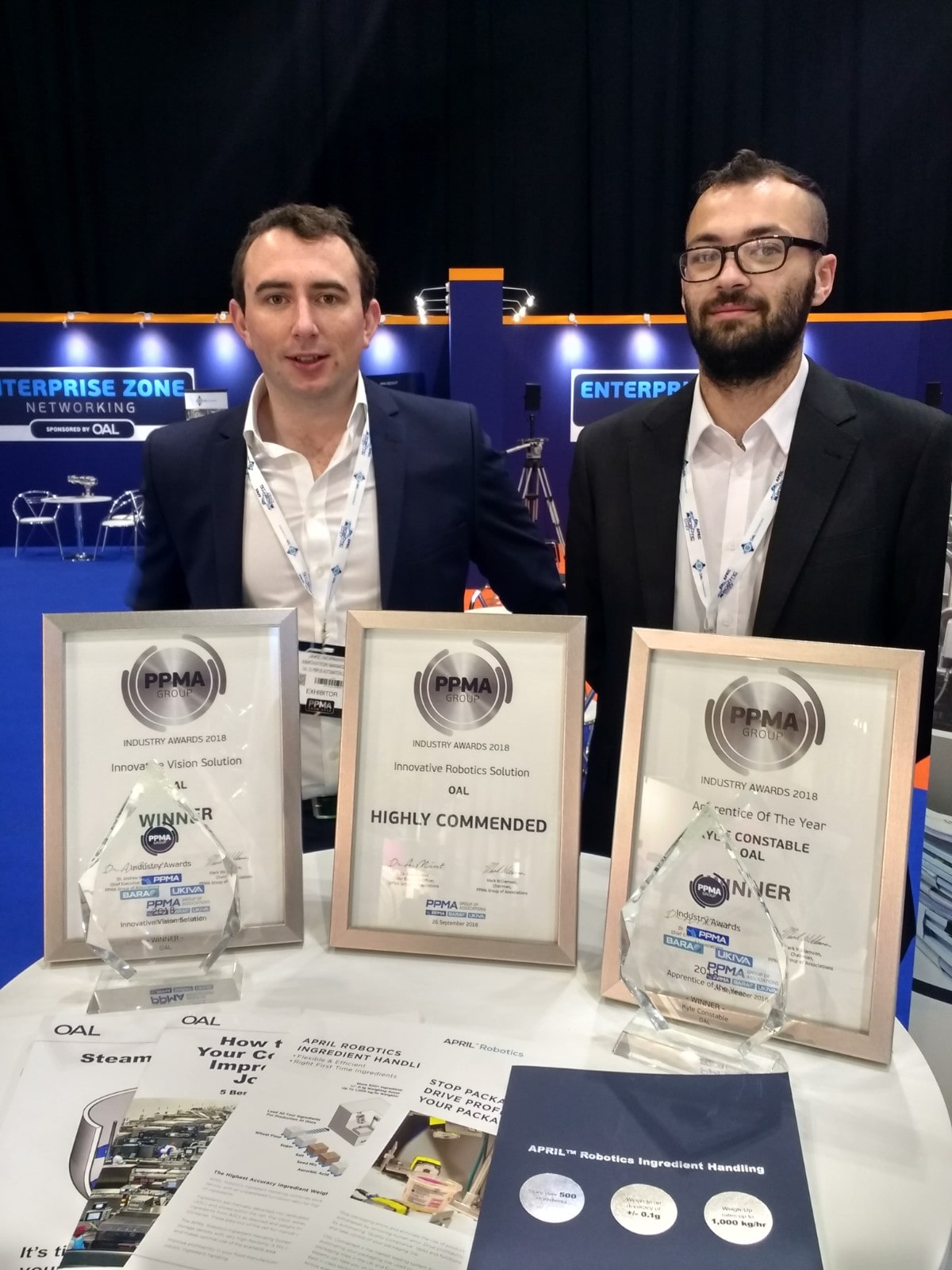
We’re very proud to announce that we took home two accolades at the PPMA Awards 2018. Our APRIL Eye system won the Innovative Vision Solution award, while Kyle Constable, Steam Infusion technical sales lead at OAL, was named Apprentice of the Year.
Innovative Vision Solution Award & Apprentice of the Year
PPMA awards
We’re very proud to announce that we took home two accolades at the PPMA Awards 2018. Our APRIL™ Eye system won the Innovative Vision Solution award, while Kyle Constable, Steam Infusion technical sales lead at OAL, was named Apprentice of the Year. We were also highly commended for our APRIL™ Robotics Ingredient Handling system! The awards recognise the finest examples of innovation, smart manufacturing and entrepreneurship in the UK food industry, and we’re delighted to have been acknowledged in three categories.
Eyes on the prize
APRIL™ Eye is the world’s first artificial intelligence vision solution. It fully automates the date code verification process to reduce the risk of product recalls and withdrawals caused by human error on packaging lines. The Innovative Vision Solution award celebrates equipment suppliers, system integrators or end users who have manufactured, designed or installed a clever, creative or innovative industrial solution. It’s fantastic that the PPMA appreciates how APRIL™ Eye can make a significant improvement to processes, safety, quality and efficiency and deliver cost savings to food manufacturers on their packaging lines.
By combining machine learning and artificial intelligence, APRIL™ Eye transforms the traditional date code verification process, which relies on operators to check the date code is printed correctly. APRIL™ Eye removes the human error inherent in these boring, repetitive tasks by reading back the date code, fully automating the date code verification process. The system can deal with variations such as lighting, positioning, print quality and placement to eliminate errors, protect consumers and the brand while at the same time reducing labour costs and waste - it’s the full package!
“You’re hired”
Acknowledging emerging talent within the food industry, the Apprentice of the Year award celebrates the most promising apprentice, and in particular their future leadership potential. Kyle Constable is a degree apprentice at OAL, helping UK and European food manufacturers adopt OAL’s Steam Infusion technology to ensure they maximise the benefits of the cooking process. With a strong background in the food industry having previously worked for Nestlé as a manufacturing apprentice, he is currently completing a degree in Food & Drink Manufacturing Operations Management at the University of Lincoln.
The award is designed to encourage more young people to take up careers in the industry, a cause that Kyle takes very seriously as he represents a success story of taking an apprenticeship route to gaining a degree qualification within the food industry and uses this experience to mentor students as part of the OAL CSR programme. It’s wonderful for Kyle to be recognised for such a prestigious award as it endorses his hard work combining studies with great performance at the company.
Harry Norman, owner of OAL, comments, “A double win at the PPMA awards - who could ask for more? We’re absolutely thrilled to win the Innovative Vision Solution PPMA Award and for Kyle to be recognised as the Apprentice of the Year. It really demonstrates to our peers the significance of the work that we’re doing and celebrates one of our team members and the valuable contribution that he makes, not just to our company but the industry as a whole.”
We’re really making a difference at OAL. Want to join us on this journey? Get in touch to find out more about our award-winning solutions or if you want to be part of a team that values training and development, have a look at our careers page today.

It’s time to fix manual ingredient weighing at iba 2018
If you’re planning to visit iba 2018, you’ll be able to see our robotic ingredient handling solution in action for the first time.
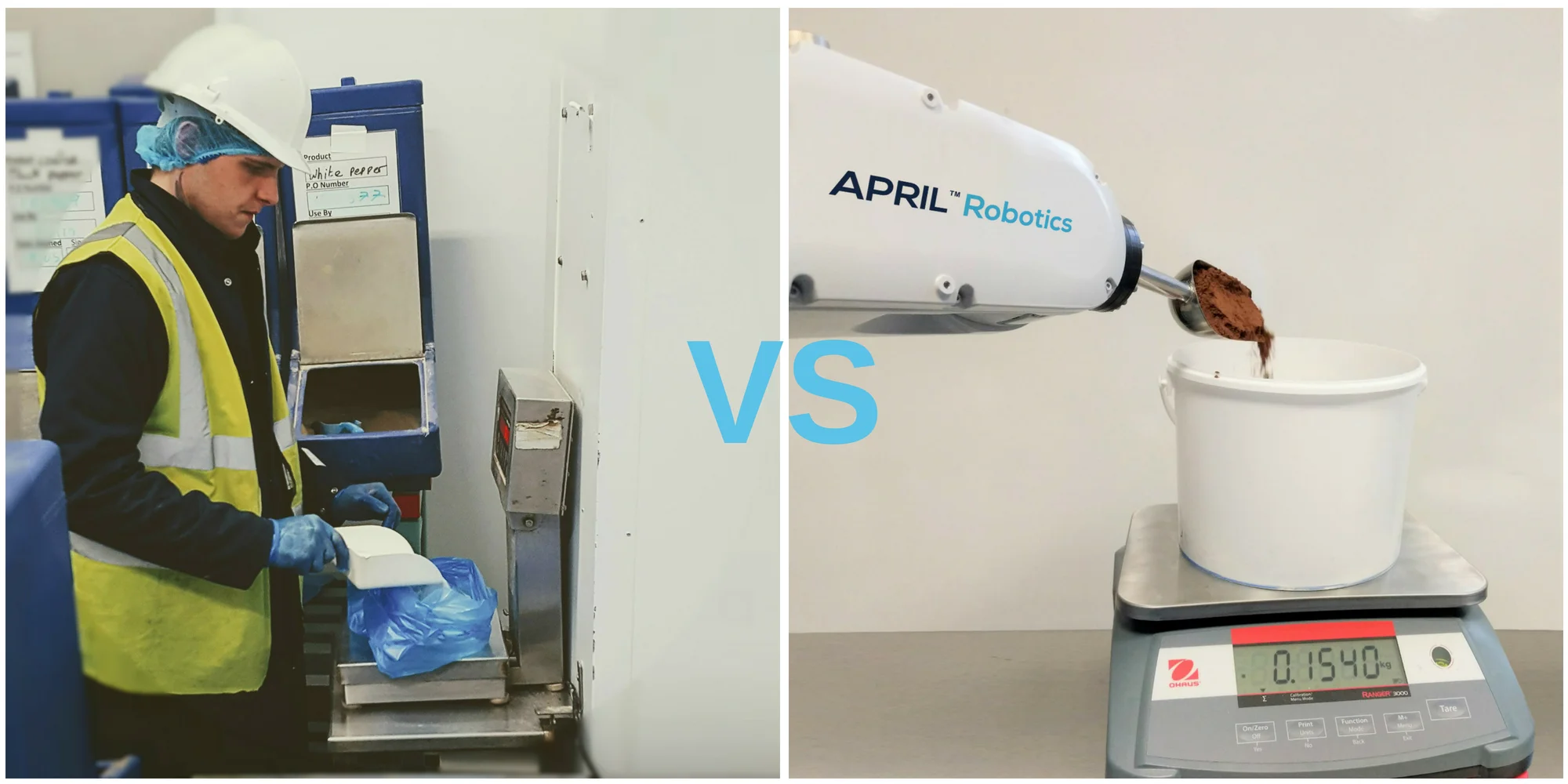
If you’re planning to visit iba 2018, you’ll be able to see our robotic ingredient handling solution in action for the first time. Did you know that manual handling and weighing of ingredients can cost bakeries up to one per cent of turnover? We’ve developed our patented robotic ingredient handling system to help you to tackle this problem, increasing your margins, as well as delivering improved accuracy and product safety.
We’re delighted to announce that the iba award judging panel has recognised the potential of our revolutionary ingredient weighing solution as we have been shortlisted for the prestigious iba award, with the winners to be announced at the show!

Robots on a roll
Our APRIL Robotics Ingredient Handling system offers a real alternative to bakeries that generally rely on operators on the factory floor to weigh out micro-ingredients. The system’s cells automatically weigh powders to an accuracy up to +/- 1g at weigh-up rates of up to 1,000kg/hr. It can also deal with a wide weighing range without any mechanical change components, reducing the risk of downtime caused by machine stoppages or breakdown. The cells have a turndown of 1,000 to 1 while maintaining the highest level of accuracy and zero product cross-contamination risk - increasing traceability and improving food safety.
Going against the grain
The reliance on operators to complete arduous weighing tasks in harsh, dusty working environments is a real problem for all involved. Health problems can ensue from working with powders, while bakeries are exposed to labour costs and the risk of errors that is par for the course when humans undertake repetitive tasks.
Traditional alternatives to labour have included mechanical, screw and auger based systems, yet they often don’t have the flexibility needed for large-scale bakeries working with many different ingredients. What’s more, common transfer lines in pneumatic conveying expose bakers to the risk of cross-contamination, not to mention the number of ingredients that these systems can't handle. Can a traditional system switch seamlessly from handling calcium propanoate to seeds? And how can bakeries deal with ‘free-from’ production with such limited tools?

Rising to the challenge
This is where autonomous robotic ingredient handling comes in. Bringing unprecedented flexibility, you can significantly improve your profitability by fully automating your ingredient handling and storage, minimising human intervention and maximising traceability and accuracy.
The APRIL cells are simple and easy to use. Ingredients are decanted into dedicated APRIL Smart Containers (ASC) and stored in a robotic cell. Whole pallets of ingredients can be decanted and stored, significantly improving operator productivity and freeing their time for other activities.
The APRIL cell integrates with ERP systems, so you can import works orders automatically into the system. Live stock levels are reported back for accurate ingredient tracking, so the robot retrieves and manages the ingredients as required and weighs them out to your recipe. The recipe mixes are then presented at integrated retrieval stations. The APRIL Robotics Ingredient Handling System combines exceptional storage density with very high flexibility. It’s easy to fit into existing bakeries and makes optimal use of the available area.
Ready for a slice of the action?
OAL has a full-sized demo operating at its Peterborough facility. Systems are currently being installed and will be operational in European plants prior to a wider roll out in 2019. With unprecedented demand already, the team is focusing on applications where weighing takes place 24/7, maximising your return on investment.
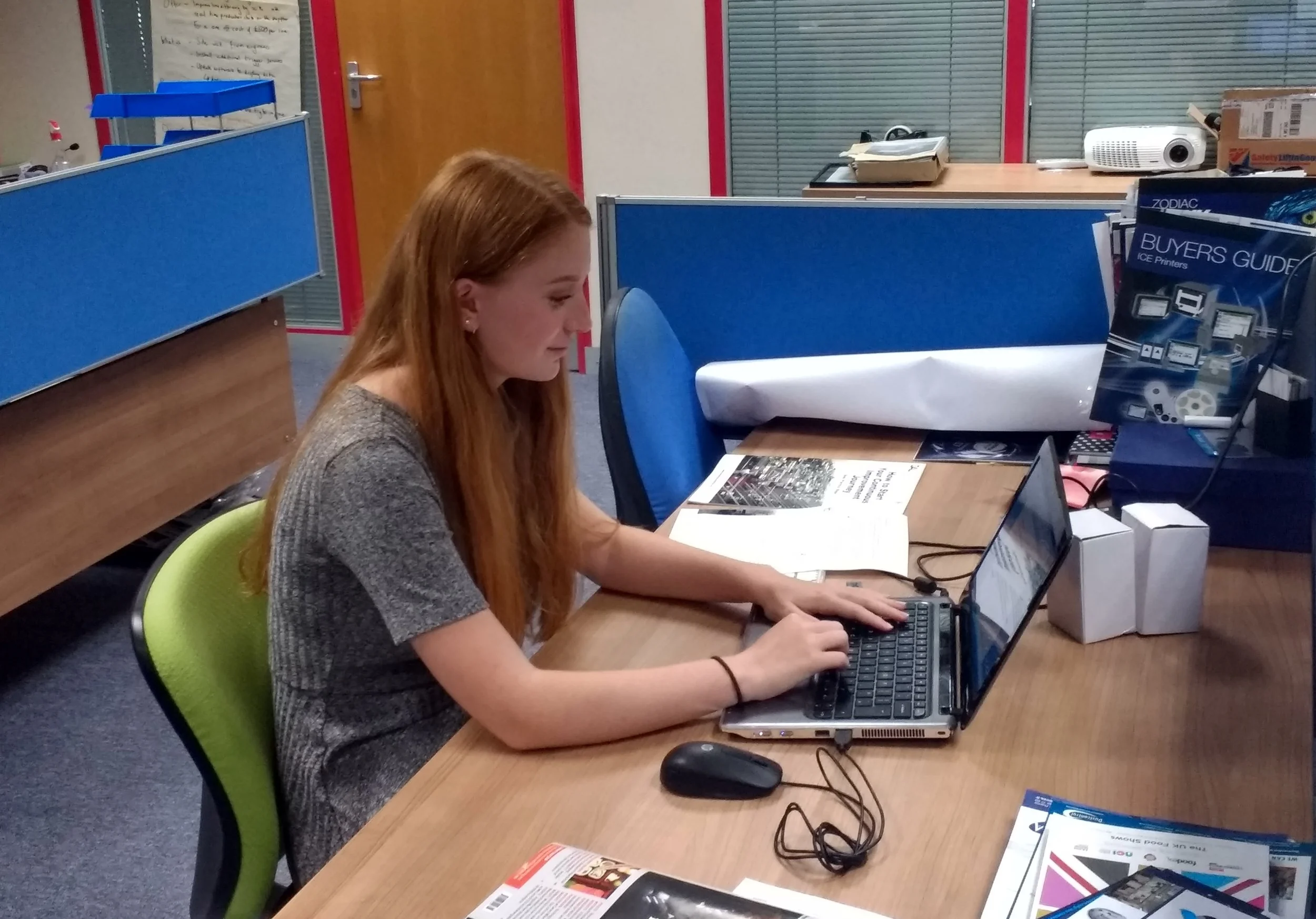
My time as a work experience student at OAL
Heading into my final year of Sixth Form, trying to determine what career path I want to go down is vital in helping me decide what my next steps are going to be, which is why finding a relevant work experience opportunity was very important to me.
Why I chose to do work experience at OAL
Heading into my final year of sixth form, trying to determine what career path I want to go down is vital in helping me decide what my next steps are going to be, which is why finding a relevant work experience opportunity was very important to me. I chose to do my week of work experience at OAL as I am currently studying maths, chemistry and art at A-level and I wanted to look into careers that combine both maths and science. Engineering was a key area of interest for me and so when OAL came to my school to talk about what engineering involves, I was immediately drawn in.

Who is OAL?
OAL uses engineering to deliver solutions to key problems within the food manufacturing industry. They offer robotics, Steam Infusion technology and label and date code verification to help improve efficiency of production and to ensure compliance with codes of practice. OAL works with customers such as Bakkavor, Diageo and Heinz to help their factories run as smoothly as possible.
A week in the life of a work experience student at OAL
On the first day of my work experience, I was introduced to everyone and taken on a tour of the premises. I also spent time with the innovation department which was extremely interesting as I had the opportunity to see one of the robots in action and learn about the testing that goes into making these robots work. The following day I was taken on a trip to the National Centre for Food Manufacturing, where I saw an APRIL robot and was shown how this technology is used in the food industry.
“It was eye-opening to see how the topics I have learnt about at school are applied to real life situations.”
Seeing projects come to life
Project design was where I spent the day on Wednesday, learning about how mechanical and electrical drawings are produced and how vital these are in the running of factories. I took a particular interest in this department as I think it is fascinating that you can go from designing a part on your screen to seeing it be manufactured and used in real life.
An opportunity to delve into something new
The following days of my work experience were spent in project software, marketing and the OAL Connected department of the company, helping expose me to areas I didn’t know anything about and wouldn’t have found out about if it weren’t for this opportunity.
Why should you choose OAL for your work experience?
I would definitely recommend work experience at OAL to anyone who has an interest in engineering or doesn’t know what path to go down with their interest in science and maths. They provide an insight into engineering that you would never get to experience at school. Getting into contact with OAL was incredibly easy and they were very keen to have me for work experience, which I found extremely refreshing after struggling to find work experience in the past.
The people I met during my time at OAL were very helpful and knowledgeable, talking me through and explaining what they were doing even if they had important jobs to get on with themselves, which I greatly appreciated. I’d like to thank OAL for the experience they gave me and in helping me gain a clearer vision of what I would like to do with my future.
If this sounds like something you'd like to do, then get in touch by clicking below and they'd be more than willing to help.

OAL’s Jake Norman keynote speaker at Cambridge University's Open Innovation Forum
We’re pleased to announce we'll be sharing insights on "Flexible Food Manufacturing" at the University of Cambridge’s Open Innovation Forum. The event, hosted by Siemens, takes place on Wednesday 11th July 2018.
We’re pleased to announce we'll be sharing insights on "Flexible Food Manufacturing" at the University of Cambridge’s Open Innovation Forum. The event, hosted by Siemens, takes place on Wednesday 11th July 2018 and will be attended by industry experts from some of the largest food manufacturers in the world.

With rising labour costs, food manufacturers ability to adopt and successfully implement robotics and automation is critical to remaining flexible. Jake Norman, Head of Innovation at OAL will share how foodtech can offer food companies affordable flexibility.
The University of Cambridge’s Open Innovation Forum is a membership group where members share best practice, exploring key topics within the food and FMCG industry, collaborating ideas and networking at regular events. The idea of a collaborative approach allows the industry to share ideas, research and experiences to help the UK’s food manufacturing industry to become number 1 in the world for flexible and innovative manufacturing.
Current members of the forum include Mars, Pepsico, Moy Park and Samworth Brothers.
“It is a pleasure for OAL to be asked to speak at this event. We won the Open Innovation Food and FMCG Innovation Pitch back in 2015 and I’m excited to share our rapid progress. Our APRIL Robotics Ingredient Handling System is a great place to start as it ensures your putting the right ingredients in the right quantities into your processes.”