
Preparing food factories for humanoid robotics
The headlines are hard to ignore. Humanoid robots are advancing fast, and food manufacturing is one of the sectors they are most likely to change.
The real question is not “when do I buy one?” It is “how do I make sure my factory is ready?”
The factories that benefit most from humanoids in the future are those that standardise automation today.
Automation trusted on 2,000+ food production lines







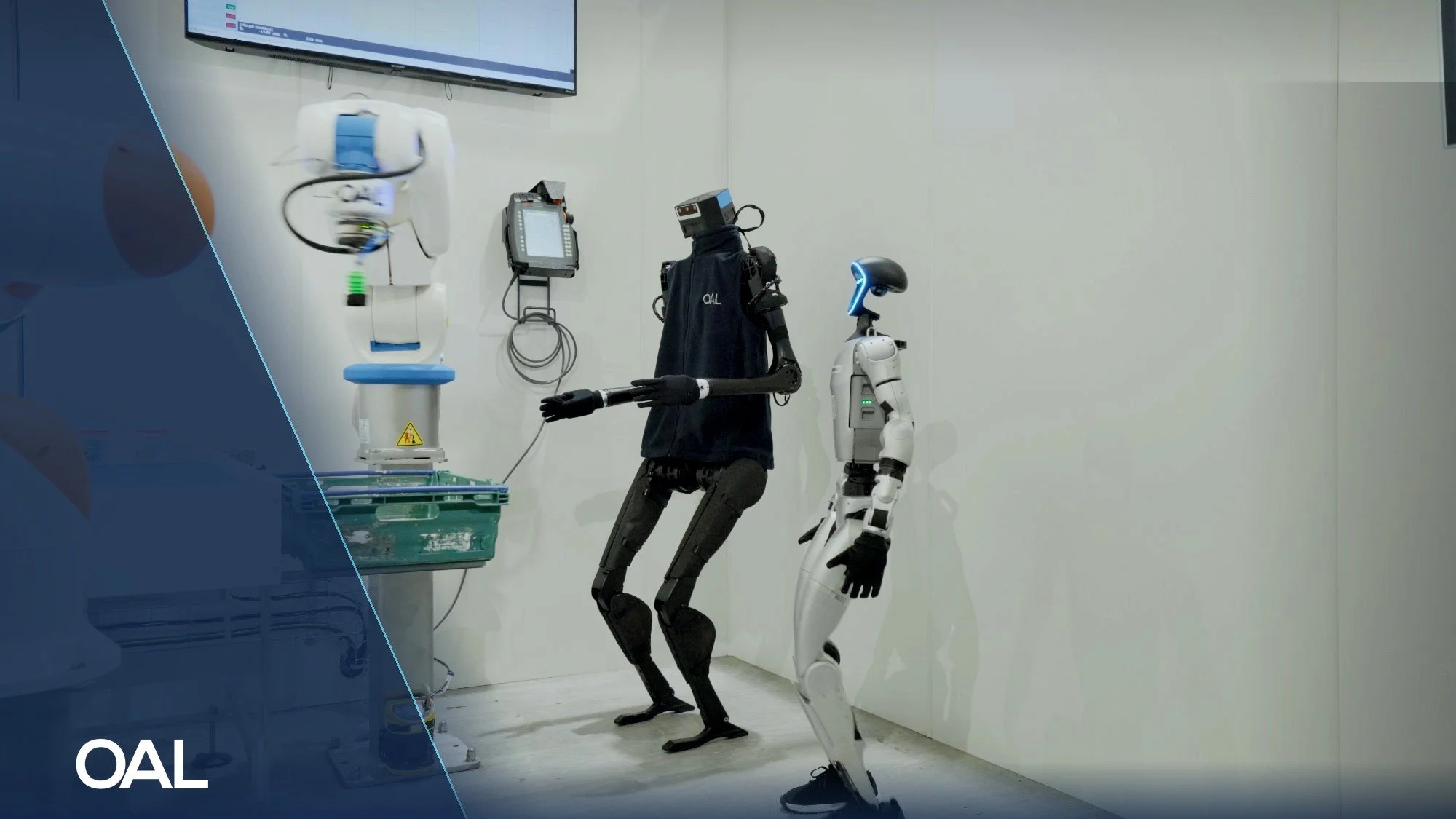
Where could humanoids add value in a food factory?
The tasks most suited to humanoid robots are the ones your teams already find hardest to fill: repetitive, physically demanding work in challenging environments.
Think about case handling on dispatch lines, manual loading and unloading between processes, line replenishment and end-of-line operations where flexibility matters more than outright speed. These are roles where labour is hard to recruit, expensive to retain, and where inconsistency drives quality and compliance risk.
Today, many of these applications are better served by purpose-built robotic cells rather than humanoids.
The question is not whether robotics works. It is the form of robotics that makes commercial sense.
Frequently Asked Questions
Answers to the most common questions you might have.
-
A humanoid robot is a machine designed to work in environments built for people. Unlike traditional industrial robots, they walk, reach, lift and adapt to dynamic factory conditions without needing cages or major infrastructure changes.
-
OAL's fenceless robots are designed for specific, high-speed tasks like case packing and palletising. They are proven, available now, and already running in production. Humanoids are a broader concept: general-purpose machines that could take on a wider range of manual tasks. Think of fenceless as today's solution, and humanoids as tomorrow's evolution.
-
They are best for dull, repetitive or physically demanding tasks such as case handling, line replenishment, end-of-line work, and manual loading or unloading.
-
Yes. OAL robots are built to seamlessly integrate with existing conveyor and packaging systems. Whether you’re running manual lines or traditional robotic solutions, our systems retrofit with minimal disruption.
-
Not yet.
Humanoid robots are advancing quickly, but they are not production ready for high-throughput UK food factories. Food-grade hygiene requirements, wet environments and the variability of real food production create challenges that are still being solved.
We expect meaningful progress over the next few years, not months.
OAL is tracking the technology closely so we can help customers move quickly when it becomes commercially viable.
-
Yes. Whether you are looking at your first automation project or planning a long-term factory strategy, we can help you build a foundation that works today and positions you for what comes next.
“Humanoid robotics has clear long-term potential. However, deployment in food production must be governed by rigorous safety and compliance standards.
In UK food factories, any new technology must be safe, legally compliant and reliable before it is introduced into live operations.
That discipline protects our people and our clients.”
A safety perspective from OAL’s Technology Director
The future of food manufacturing starts with what you automate today.
Start a conversation
+44 1733 394700
A1 Parkway Peterborough, PE2 6YN, United Kingdom
sales@oalgroup.com
Automation without barriers

© Copyright | 2025 OAL Group, LLC