
OAL News
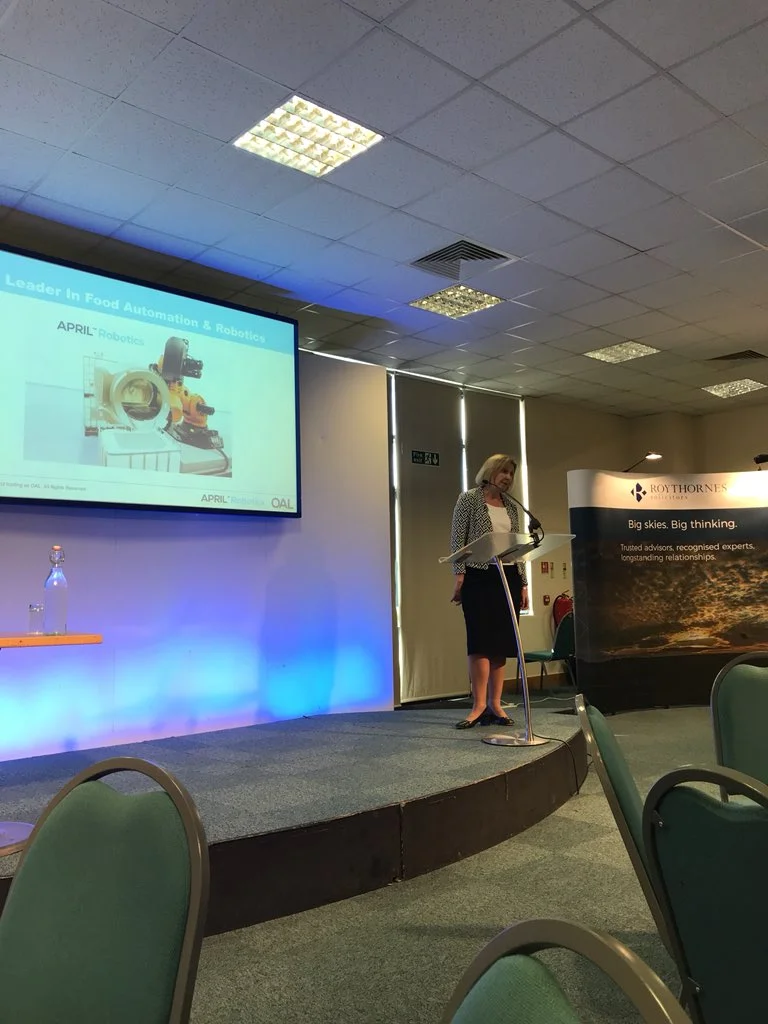
How to become the global leader in robotic food processing - Roythornes Food Business Breakfast
The UK will be the global market leader for robotic food processing. At the recent Roythornes Food Business Breakfast, Samantha Norman (BEng) shared how OAL is working with academia, our customers and the supply chain to make this vision a reality.
The UK will be the global market leader for robotic food processing. At the recent Roythornes' Food Business Breakfast, Samantha Norman shared how OAL is working with academia, customers and the supply chain to make this vision a reality.

Number 1 in robotic food processing
It sounds good, doesn’t it?
The UK food industry is widely recognised as the global leader in convenience food and innovation but our ability to embrace automation, digital and robotics is critical to ensuring our leadership. It's this leadership that will ensure strong exports and create new jobs in the largest UK manufacturing industry.
We must work together as a supply chain to realise this vision.
Samantha shared how OAL are working with our partners to lead the robotic revolution in ingredient handling and processing. Over 150 delegates from across the supply chain caught a glimpse of this future with a live demonstration of our APRIL Robotics Ingredient Handling System.
Rather than a person handling and weighing out ingredients by hand, APRIL automates the task!
Roythornes Food Business Breakfast
Roythornes Solicitors’ bi-annual business breakfasts invites food and drink industry professionals from a multitude of backgrounds to network; sparking discussion, debate and a collaborative approach to driving improvements in the food and drink industry.
“Our Food Business Breakfast has become a key staple in the networking calendar for business professionals based in both Peterborough and other areas of the UK.
Improved efficiency, reduced labour costs and reliability are all potential benefits to implementing robotics, and Sam offered an interesting perspective on what this actually means in practice, exploring the use of robots in the sector and how the industry needs to work collaboratively in order to stay flexible and compete with organisations within Europe and across the world.”
Join the robotics revolution!
New racing season dates released
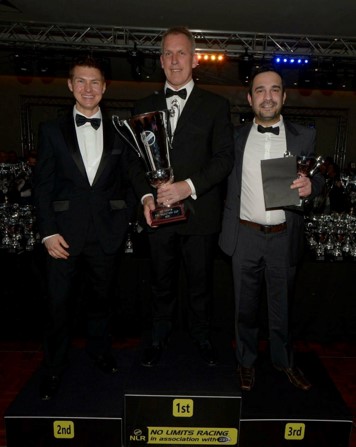
With the 2018 racing season nearly upon us, OAL is excited to be sponsoring their very own Dan Nemati once again in his No Limits Racing competition!
With the 2018 racing season nearly upon us, OAL is excited to be sponsoring their very own Dan Nemati once again in his No Limits Racing competition! After coming third in the 2017 season in his Pre Injection 600, we're hoping that 2018 will be his winning year!
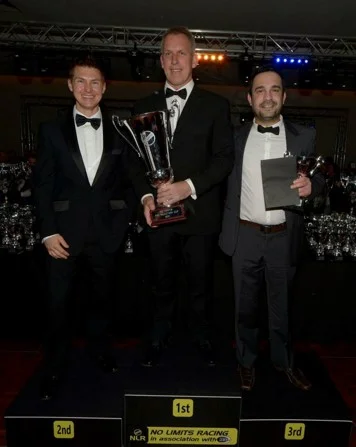
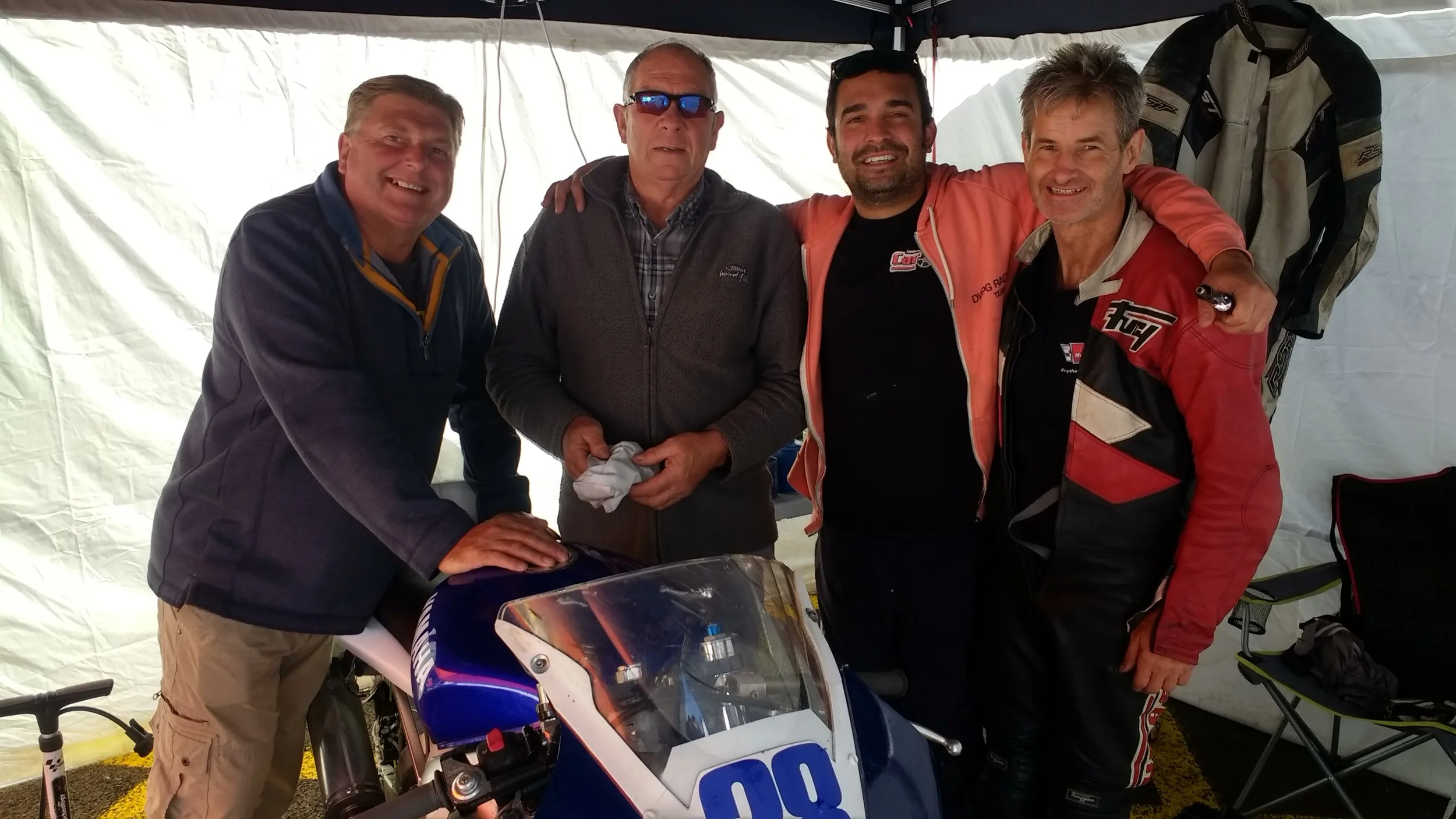
Dan, a Support Engineer for OAL Connected has been committed to racing for three years and is now in the No Limits Pre Injection 600 category racing with a Yamaha R6.
The races he will be competing in are as follows:
March 24-25 – Round 1: Snetterton 300.
April 21-22 – Round 2: Cadwell Park.
May 19-20 – Round 3: Donnington Park.
July 14-15 – Round 5: Croft.
July 28 – 8 Hour Endurance.
August 10-11 – Round 6: Oulton Park (Friday and Saturday event).
September 1-2 – Round 7: Cadwell Park.
October 6-7 – Round 8: Donnington Park.
If you or your colleagues wish to attend to support Dan in his racing, please get in touch here. It would be great to see as many people there as possible.
Dan would also like to take this opportunity to thank all who supported him in 2017.

APRIL™ Robotic Weighing shortlisted for World Food Innovation Award
We are pleased to announce that our APRIL Robotics Weighing Station has been shortlisted for “Best Technology Innovation” in the World Food Innovations Award 2018.
We are pleased to announce that our APRIL™ Robotics Ingredient Handling system has been shortlisted for Best Technology Innovation in the World Food Innovations Award 2018.
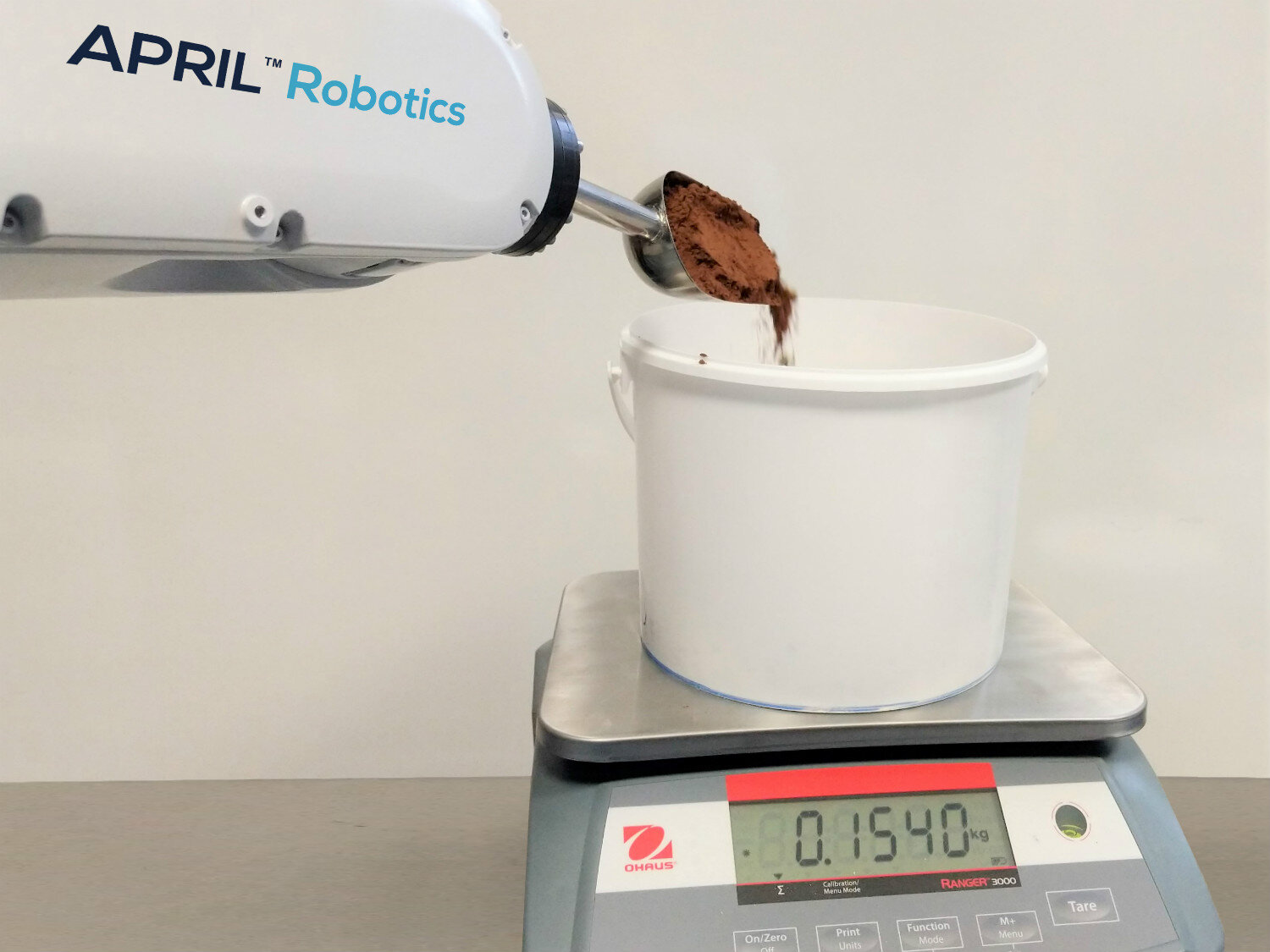
It’s fantastic recognition of how much of an impact our highly innovative APRIL™ Robotic Ingredient Handling system has on the way the food industry handles and processes ingredients.
Weighing out powders is a manual repetitive task that is highly susceptible to human error. The APRIL™ Robotics Ingredient Handling system automates this task offering unrivalled accuracy and efficiency. The advanced torque force sensors within the collaborative robot allow us to weigh out ingredients to an accuracy of +/- 1g or 1% by weight every time, a level of accuracy unachievable by humans.
At OAL, we are passionate about using the very latest in innovative technological solutions, processes and applications to help sustain and secure the UK’s largest food manufacturing industry.
Customers have guided us with distinct requirements for each sector allowing each team to work as a focused fast moving group dedicated to their specific market. The OAL tradition of trust, fairness and investment in our people bonds our teams. We strive to keep our customers ahead and future-proofed by leading multiple R&D projects currently valued at £3.5 million aimed at developing tomorrow's tried and trusted.

Shortlisted for two awards in the first round of the Made in the UK Awards
We are pleased to announce that our APRIL Robotics Cooking Cell has been shortlisted in the first round of the “Made in the UK Awards” in the categories ‘Digital Engineering/Technology’ and ‘Manufacturing Innovation’’.

We’re pleased to announce that our APRIL™ Robotics Cooking Cell has been shortlisted in the first round of the Made in the UK Awards in the categories Digital Engineering/Technology and Manufacturing Innovation.

The APRIL™ Cooking Cell developed with the University of Lincoln at their National Centre for Food Manufacturing revolutionises the way we manufacture food. By combining advanced materials handling and processing technologies, APRIL™ can consistently emulate how chefs cook in a professional kitchen bringing restaurant standard food to our supermarket shelves.
She effortlessly moves pans around the factory without pumps and pipework to combine and process ingredients; heating, mixing and pouring soups, sauces and ready meals on an industrial scale. Using a pre-programmed schedule, APRIL™ can process multiple recipes at the same time to a consistent and accurate standard, without contamination.
APRIL™ moves away from traditional linear continuous production set-ups where high volume and limited flexibility impedes quality and consistency (due to pumps, pipework and large vessels). With an 80% smaller factory footprint, intelligent scheduling and automated modular processing system, APRIL™ increases flexibility, optimises productivity and improves efficiency in a safer and more hygienic environment.
This opens up opportunities for manufacturers to research and develop new products and extend shelf-life of products contributing to reducing food wastage.
“We are excited by the new thinking involved in the APRIL™ robotic chef approach. Modular robotics cells may transform food manufacturing kitchens, by breaking up processes in a different way, in doing so providing a step change in performance.”
As a company, we are passionate about revolutionising the way we manufacture food, helping to secure the future of the UK’s largest manufacturing industry through innovative technological solutions, processes and applications.

New £900k Robotic Ingredient Handling project
Did you know as much as 5% of a food manufacturer’s turnover is associated with the costs of raw material handling, weighing and preparation? That number is set to drop as engineers, food technologists and computer scientists, drawn from UK industry and academia, collaborate to fully automate the preparation and handling of raw materials.
Did you know as much as 5% of a food manufacturer’s turnover is associated with the costs of raw material handling, weighing and preparation? That number is set to drop as engineers, food technologists and computer scientists drawn from UK industry and academia collaborate to fully automate the preparation and handling of raw materials.
We're leading a major new industrial R&D project in collaboration with researchers from the University of Lincoln, UK, and English Provender Company, an award-winning producer of condiments, dressings and marinades. The collaboration is part-funded by a UK Government grant of almost £900,000 from Innovate UK through its Materials & Manufacturing research fund funding stream.
The project aims to address the unique complexity of food manufacturing ingredient variability. In a given day, food manufacturers can deal with over 200 different raw materials with different states (solid, liquid, frozen, ambient and chilled), packaging format (bag, sack, box and drum), allergens and handling difficulties. It’s this complexity that to date has led to high manning levels, waste and inefficiencies in the industry.
Deploying our suite of APRIL Robotics Material Handling modules as our toolset at the University of Lincoln’s National Centre for Food Manufacturing, the research team is exploring how to integrate robotic and automation solutions at each step of the production process. The research will examine how processes such as product handling and weighing can be streamlined and made more efficient through new robotic technologies.

“The ability to accurately and efficiently prepare, weigh and batch the complex combination of ingredients within our product portfolio really is the engine room of our production environments. The processes involved have a direct effect on food safety, product quality and factory efficiency. We believe that the use of increased automation and technology to provide enhanced control, accuracy and repeatability will have a massive positive effect on all three of these critical factors within this core business function.”
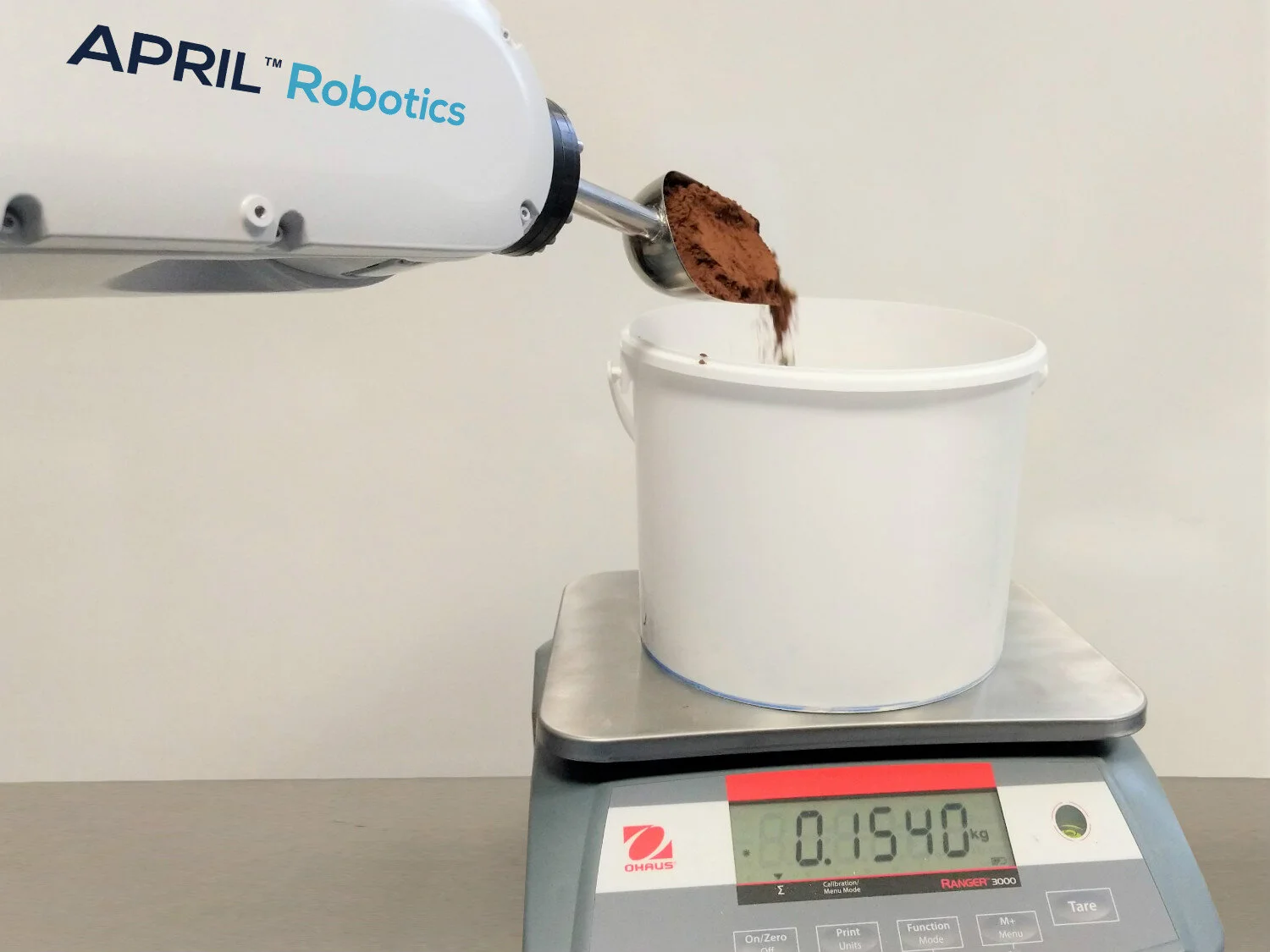
One of the APRIL Robotics technologies that will be used in the project is a micro-ingredient weighing station that uses a collaborative robot to weigh out free flowing and non-free flowing powdered ingredients to an accuracy of 1g. This technology was developed under a separate Innovate UK project between OAL and the University of Lincoln.
“Weighing out powders is a common task across the industry that presents accuracy and health and safety challenges when undertaken by people. By using a collaborative robot and smart algorithms from the University of Lincoln, we can quickly weigh out powders, to a recipe, to an accuracy of 1g with zero cross contamination. In this project, we’re working with EPC to map out their processes and crunch a year’s production data to analyse what the best solution is, looking at the potential for optimisation at each step.”
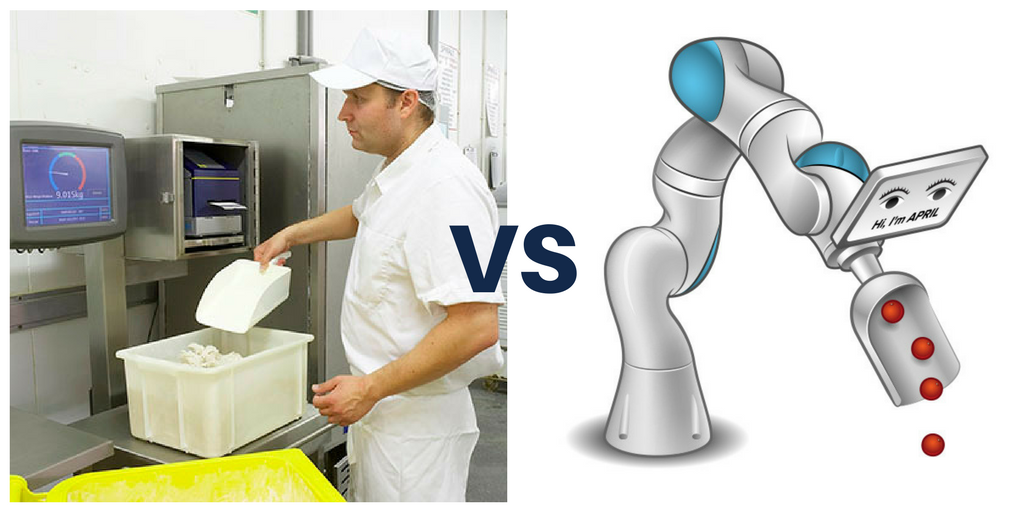
Robotic micro weighing removes the health & safety challenges associated with manual weighing
Mark Swainson, Deputy Head at the University of Lincoln's National Centre for Food Manufacturing (NCFM) is an expert in the field of industrial food processing technology. He will lead the research team which also includes specialists in robotics, automation and process control from the University of Lincoln’s School of Engineering.
“To unlock improved value, quality and sustainability, the food manufacturing sector needs a game-changing, innovative reinvention of its production processes. We want to push the practical and scientific boundaries of food process technologies, robotic materials’ handling, machine learning, and computer vision systems. The goal is to produce a full technological solution which provides proof that robotics and automation can be the catalyst for much-needed productivity gains in the food manufacturing industry.
The industry needs a step change. All the low hanging fruit has gone. This project is not about marginal gains, it is about identifying a game-changer that can turbocharge productivity in food manufacturing processes.”